.svg)

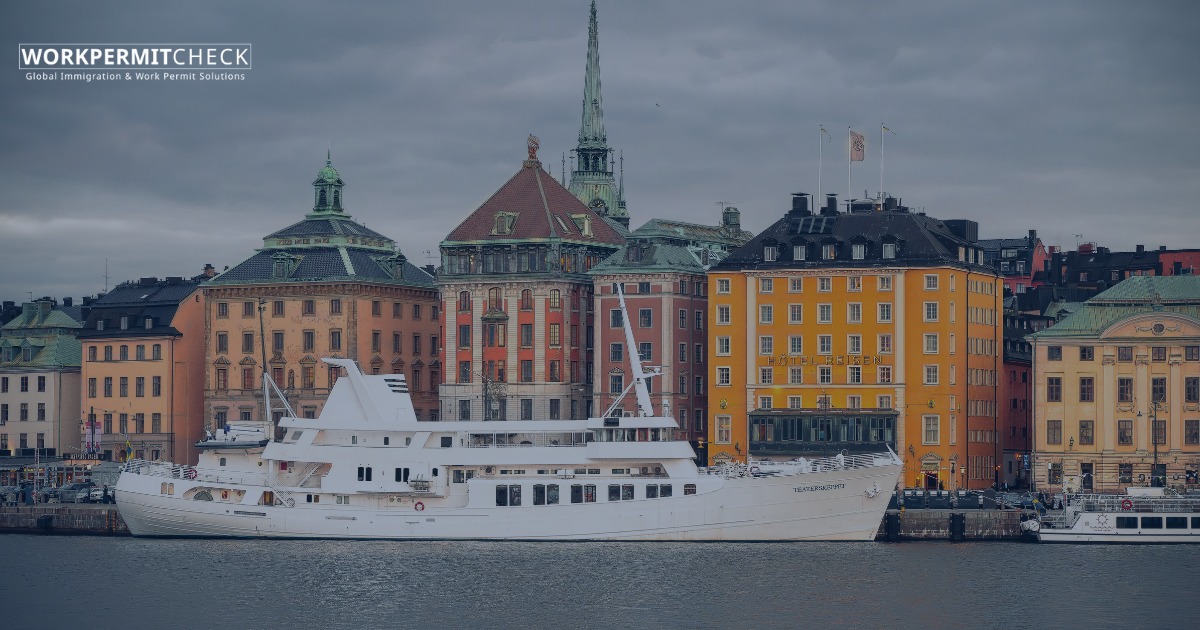
The EU Blue Card in Sweden is a residence and work permit designed for highly skilled non-EU professionals who have secured qualified employment in Sweden.
It is part of a European framework that allows skilled workers to live and work in EU countries under favorable conditions and may offer mobility advantages across the EU.
At WorkPermitCheck, applicants often confuse the EU Blue Card with standard work permits. The Blue Card targets high-skill roles with specific salary and qualification thresholds.
What Is the EU Blue Card in Sweden?
The EU Blue Card is a highly skilled worker residence permit that allows qualified professionals to:
• Live and work in Sweden
• Access a multi-year residence permit
• Potentially move within the EU under Blue Card rules
• Build eligibility toward long-term residence
It is employer-sponsored and role-specific.
Who Qualifies?
Applicants typically qualify if they:
• Hold higher education qualifications or equivalent professional experience
• Have a job offer for a highly skilled role
• Meet minimum salary thresholds set for Blue Card eligibility
• Work in a position requiring specialized expertise
Authorities assess both the role and the applicant’s qualifications.
Key Requirements
Common requirements include:
• Valid employment contract
• Proof of higher education or equivalent experience
• Salary meeting Blue Card threshold
• Passport and supporting documents
• Employer compliance documentation
Salary level is one of the most important criteria.
Salary Threshold
The EU Blue Card requires a salary higher than standard work permit levels. The threshold is defined by Swedish authorities and may change periodically.
If salary falls below the required level, applicants may need to apply under a standard work permit instead.
Duration
The Sweden EU Blue Card is typically issued for:
• The length of the employment contract
• Up to a multi-year maximum
Renewal is possible if conditions remain satisfied.
Benefits Compared to Standard Work Permit
The EU Blue Card may provide:
• Faster pathway toward long-term residence
• Recognition across EU Blue Card systems
• Greater mobility options
• Eligibility for family reunification
• Multi-year validity
Benefits depend on continued eligibility.
Can EU Blue Card Lead to Permanent Residence?
Yes. Time spent legally under a Blue Card may count toward:
• Long-term residence in Sweden
• EU long-term resident status
• Citizenship eligibility (subject to rules)
Continuous legal residence is required.
Common Reasons for Refusal
Applications may be refused due to:
• Salary below threshold
• Role not considered highly skilled
• Insufficient qualification proof
• Employer documentation issues
• Incorrect permit category selection
Proper classification is essential.
How WorkPermitCheck Helps
WorkPermitCheck provides independent verification support to help:
• Confirm Blue Card eligibility indicators
• Review employer documentation
• Check salary compliance
• Identify classification risks
• Reduce refusal risk
We do not issue permits. We verify authenticity and compliance indicators.
Key Takeaway
The Sweden EU Blue Card is designed for highly skilled professionals with qualified job offers and higher salary levels.
It offers long-term residence advantages but requires careful eligibility assessment and documentation accuracy.
Frequently Asked Questions
Is the EU Blue Card the same as a Sweden work permit?
No. The Blue Card is specifically for highly skilled workers.
Do I need a job offer?
Yes. Employer sponsorship is required.
Can I change employers?
Possible, but authorization may be required.
Does the EU Blue Card lead to PR?
Yes, with continuous legal residence.
Is it only for tech jobs?
No. It applies to many highly skilled professions.
Disclaimer
This article is for informational purposes only and does not constitute legal or immigration advice. Sweden EU Blue Card requirements may change and vary by case. Always confirm official requirements with Swedish authorities. WorkPermitCheck provides independent verification support and does not issue visas or residence permits.
February 25, 2026