.svg)


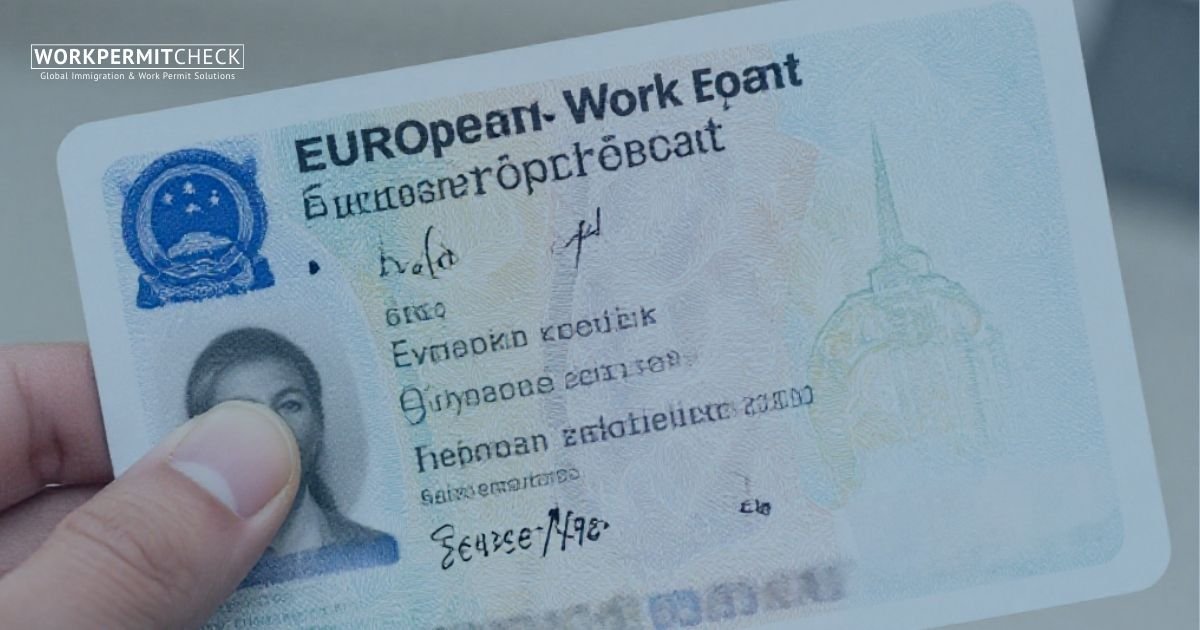
Yes, unskilled and low-skilled workers can get EU work permits, but only in specific sectors and under certain conditions. Many European countries face labor shortages in manual and service jobs, which creates legal job opportunities for foreign workers without higher education or professional degrees.
What Is Considered an Unskilled Job in Europe?
Unskilled or low-skilled jobs usually do not require a university degree. Some basic training or experience may still be needed.
Common examples include:
- Factory workers
- Warehouse helpers
- Cleaners and housekeeping staff
- Farm and agricultural workers
- Construction helpers
- Hotel and restaurant staff
- Caregivers and support workers
These jobs are essential to the European economy and often face worker shortages.
Do EU Countries Actually Hire Unskilled Foreign Workers?
Yes. Many EU countries officially allow employers to hire foreign workers for shortage occupations when local workers are not available.
Countries with regular demand include:
- Poland
- Romania
- Hungary
- Croatia
- Lithuania
- Latvia
These countries often recruit workers for manufacturing, agriculture, logistics, and hospitality roles.
Types of EU Work Permits for Unskilled Workers
National (Country-Specific) Work Permits
Most unskilled workers enter Europe through national work permits, not EU Blue Cards.
Key points:
- Permit is valid only for one country
- Job-specific and employer-sponsored
- Renewable if employment continues
Seasonal Work Permits
Some EU countries offer seasonal visas, mainly for agriculture and tourism.
Typical duration:
- 3 to 9 months
- Limited rights but faster processing
This option is common for farm workers and hotel staff.
Basic Requirements for Unskilled EU Work Permits
While rules vary by country, most applications require:
- Valid passport
- Job offer from an EU employer
- Employment contract
- Basic medical insurance
- Clean criminal record
- Proof of accommodation (in some cases)
Language skills are usually not mandatory, though basic English or local language is helpful.
Which Jobs Are Most Approved for Unskilled Workers?
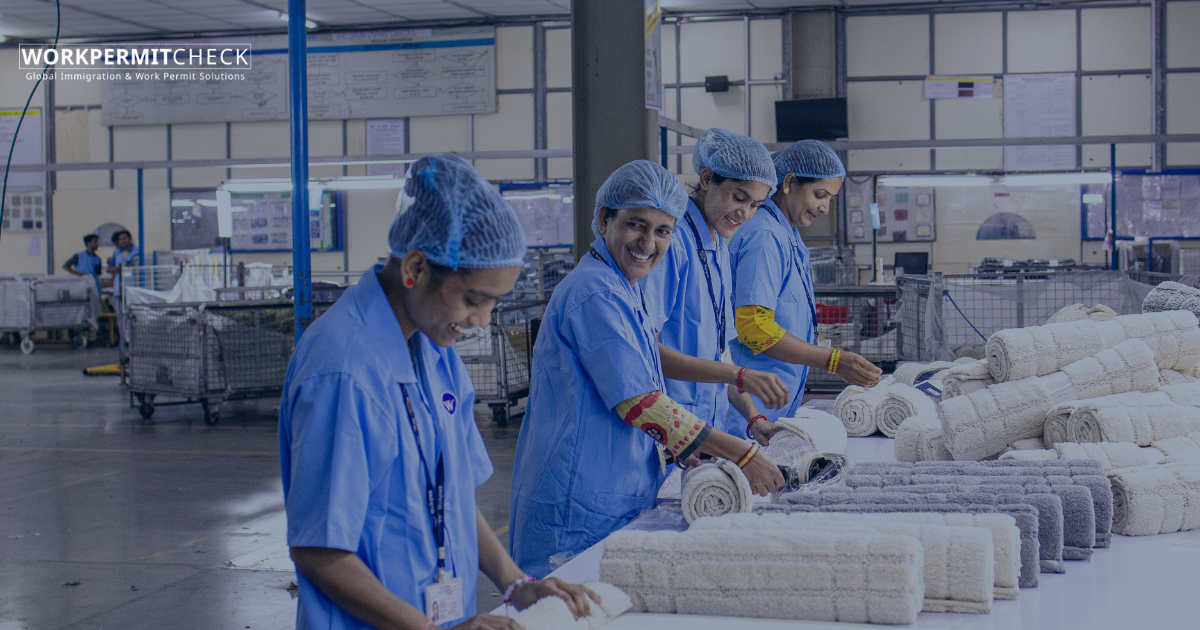
Manufacturing and Factory Jobs
- Assembly line workers
- Packaging staff
- Machine helpers
High demand in Central and Eastern Europe.
Agriculture and Farming
- Fruit and vegetable pickers
- Greenhouse workers
- Dairy farm helpers
Often offered as seasonal jobs with accommodation.
Cleaning and Housekeeping
- Hotels
- Offices
- Airports and malls
These roles are widely available across Europe.
Construction Support Roles
- Helpers
- Loaders
- Site assistants
Some basic safety training may be required.
Salary Expectations for Unskilled Jobs in Europe
Average monthly salaries (before tax):
- €800 to €1,500 in Eastern Europe
- €1,200 to €2,000 in parts of Western Europe
Many jobs include:
- Free or low-cost accommodation
- Overtime pay
- Paid leave
Exact salary depends on country, job type, and hours worked.
Can Unskilled Workers Get Permanent Residence Later?
In some countries, yes.
If you:
- Work legally for several years
- Renew permits on time
- Pay taxes and social contributions
You may qualify for:
- Long-term residence
- Family reunification
- Job mobility within the same country
Each country has different timelines and rules.
Common Myths About Unskilled EU Work Permits
“Europe only hires skilled workers”
Not true. Many essential jobs are unskilled and legally open to foreigners.
“Agents can guarantee a visa”
False. Only embassies and immigration authorities decide visa approvals.
“Unskilled jobs are illegal or unsafe”
Legal jobs with proper permits are protected by EU labor laws.
How to Apply Safely for an EU Unskilled Work Permit
- Find a verified employer or licensed recruiter
- Get a written job offer
- Employer applies for work authorization
- Apply for a visa at the embassy
- Travel and register after arrival
Never pay large upfront fees without official documents.
Is Europe a Good Option for Unskilled Workers?
For many workers, yes.
Europe offers:
- Legal employment
- Better wages than many home countries
- Worker protection laws
- Opportunity to build long-term stability
However, choosing the right country and legal route is critical.
Final Thoughts
Unskilled workers can legally get EU work permits if they apply through the correct process and target shortage jobs. Europe continues to need reliable workers in many essential sectors.
Always verify job offers, follow official procedures, and avoid shortcuts.
January 30, 2026