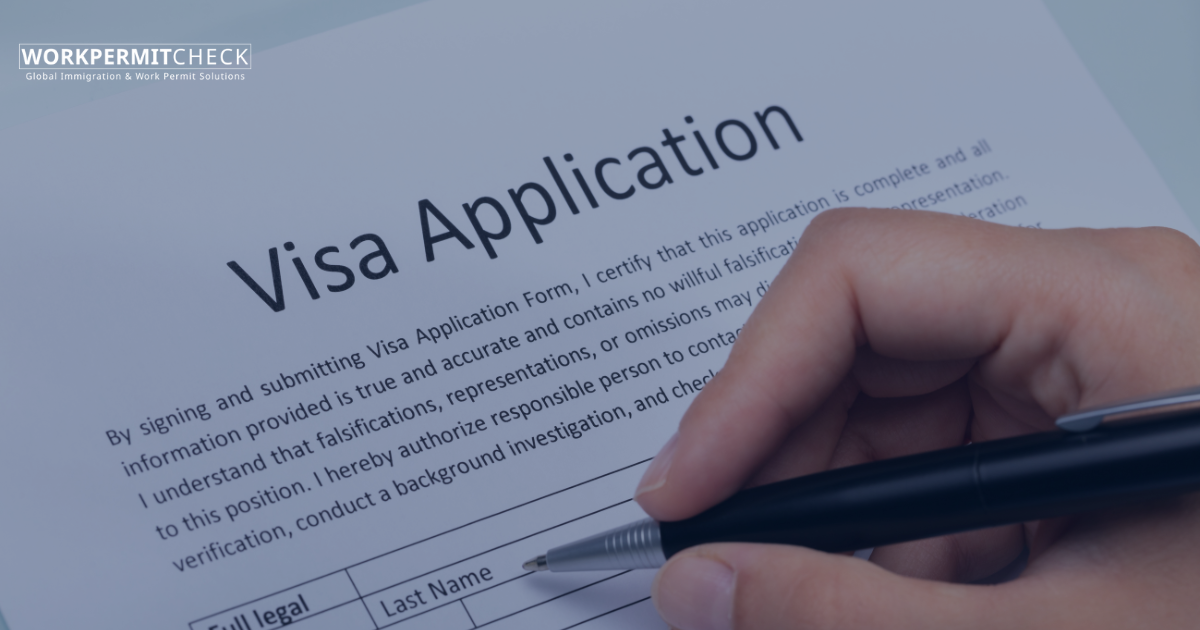
.svg)


Many people who move abroad for work ask an important question:
Can a work permit lead to citizenship?
The short answer is yes, but not directly. A work permit is usually the first step in a longer legal process that can eventually lead to permanent residence (PR) and then citizenship.
This article explains the complete pathway, country rules, timelines, and common mistakes—so you know exactly what to expect.
How a Work Permit Fits Into the Citizenship Process
A work permit allows you to live and work legally in a country for a limited time.
It does not give citizenship on its own.
In most countries, the process looks like this:
Work Permit → Temporary Residence → Permanent Residence → Citizenship
Each step has its own rules, time requirements, and conditions.
Step 1: Start With a Legal Work Permit
Your journey begins with a valid work permit or work visa sponsored by an employer or approved by the government.
To qualify, you usually need:
- A valid job offer
- Required skills or qualifications
- Clean police record
- Medical clearance
- Valid passport
Some work permits are short-term, while others are designed as pathways to long-term settlement.
Step 2: Build Legal Residency Through Work
Most countries count years of legal stay when you live and work continuously.
Important points:
- Your permit must be valid and renewed on time
- You must follow local laws
- You must pay taxes and social security
- Gaps or overstays can reset your timeline
Usually, 3 to 5 years of work-based residence is required before you can apply for permanent residence.
Step 3: Apply for Permanent Residence (PR)
Permanent Residence is the key bridge between a work permit and citizenship.
With PR, you can:
- Live and work without employer restrictions
- Access more social benefits
- Stay long-term without frequent renewals
PR eligibility depends on:
- Length of legal stay
- Employment history
- Income stability
- Language ability
- Integration into society
Step 4: Apply for Citizenship (Naturalization)
After holding PR for a required period, you can apply for citizenship by naturalization.
Common requirements include:
- Total legal stay (usually 5–10 years)
- Good character and clean criminal record
- Language proficiency
- Basic knowledge of the country’s culture or laws
- Proof of financial stability
Country Examples: Work Permit to Citizenship Pathways
Different countries follow different timelines. Below are common examples:
Germany
- Work → PR: around 4–5 years
- Citizenship: usually after 8 years (can be shorter with integration courses)
Canada
- Work → PR: 1–3 years (Express Entry, PNP)
- Citizenship: after 3 years as a permanent resident
Australia
- Work → PR: 2–4 years
- Citizenship: after 4 years of lawful stay
United Kingdom
- Work → PR (ILR): 5 years
- Citizenship: 1 year after ILR
Each country has its own rules, so timelines may change based on visa type and personal profile.
Does Every Work Permit Lead to Citizenship?
No. Not all work permits lead to citizenship.
Examples of permits that usually do not lead to citizenship:
- Seasonal or temporary labor visas
- Short-term contracts with no renewal option
- Internship or trainee visas
- Some domestic worker or temporary farm visas
You must choose a settlement-friendly work permit if citizenship is your goal.
Key Factors That Improve Your Citizenship Chances
Your chances improve if you:
- Work continuously without long gaps
- Learn the local language
- Pay taxes regularly
- Avoid legal issues
- Upgrade skills or qualifications
- Integrate into society
Countries value stable, law-abiding workers who contribute to the economy.
Common Mistakes to Avoid
Many applicants delay or lose eligibility because of:
- Overstaying a visa
- Working illegally
- Switching employers without approval
- Not renewing permits on time
- Ignoring language or integration requirements
Small mistakes can delay citizenship by years.
Is Citizenship Guaranteed After Working for Many Years?
No country guarantees citizenship.
Citizenship is a privilege, not a right.
Even after meeting all requirements, the government can refuse an application if:
- Documents are incomplete
- There is a criminal record
- There is tax non-compliance
- There are security concerns
However, most eligible applicants are approved when rules are followed properly.
Final Answer: Can a Work Permit Lead to Citizenship?
Yes—a work permit can lead to citizenship, but only step by step.
Think of a work permit as the foundation, not the final result.
If your long-term goal is citizenship, you must:
- Choose the right country and visa
- Maintain legal status
- Secure permanent residence
- Meet naturalization rules
Planning early makes the process smoother and faster.
January 19, 2026