.svg)


If you want to work in Canada as a foreign worker, you may hear the term LMIA. It is one of the most important requirements for many Canada work permits.
What is LMIA?
LMIA stands for Labour Market Impact Assessment.
It is an official document issued by Employment and Social Development Canada (ESDC). It allows Canadian employers to hire foreign workers when they cannot find suitable Canadian citizens or permanent residents for the job.
A positive LMIA means the employer is allowed to hire a foreign worker.
A negative LMIA means the employer cannot hire a foreign worker for that position.
Why is LMIA Required?
The main purpose of LMIA is to protect jobs for Canadian citizens and permanent residents.
The Canadian government wants to make sure that hiring a foreign worker will not negatively affect local workers.
LMIA ensures that:
- The employer tried to hire Canadian workers first
- There is a real shortage of workers
- The job offer is genuine
- The salary and working conditions meet Canadian standards
This protects both Canadian workers and foreign workers.
Who Needs an LMIA?
Most foreign workers applying for an employer-specific Canada work permit need an LMIA.
You may need an LMIA if:
- You have a job offer from a Canadian employer
- Your job is not LMIA-exempt
- Your employer is hiring through the Temporary Foreign Worker Program
Common jobs that require LMIA include:
- Construction workers
- Factory workers
- Caregivers
- Truck drivers
- Farm workers
- Hospitality workers
Who Does Not Need an LMIA?
Some workers can apply for LMIA-exempt work permits.
These include:
- International students applying for PGWP
- Spouses of skilled workers or students
- Intra-company transfer employees
- Workers under international agreements
- Open work permit applicants
These workers can apply without LMIA approval.
Types of LMIA
There are different types of LMIA based on the job and program.
1. Temporary Foreign Worker LMIA
This is the most common type. It allows employers to hire foreign workers temporarily.
It is used for jobs in:
- Agriculture
- Hospitality
- Construction
- Manufacturing
2. Permanent LMIA
This type supports permanent residence applications.
It is used when employers want to hire foreign workers permanently.
3. High-Wage LMIA
This applies when the salary is above the provincial average wage.
Employers must submit a transition plan to hire Canadian workers in the future.
4. Low-Wage LMIA
This applies when the salary is below the provincial average wage.
Employers must follow stricter rules.
How Does LMIA Work?
The LMIA process involves the employer, not the worker.
Here is how it works:
- Employer advertises the job in Canada
- Employer tries to hire Canadian workers
- If no suitable candidate is found, employer applies for LMIA
- Government reviews the application
- LMIA is approved or rejected
- If approved, foreign worker can apply for work permit
Documents Required for LMIA
Employers must provide:
- Job offer details
- Salary information
- Proof of job advertisement
- Business registration documents
- Proof of labor shortage
Workers need LMIA approval to apply for a work permit.
What is a Positive LMIA?
A positive LMIA means:
- The employer is allowed to hire a foreign worker
- There are no Canadian workers available for the job
- The job offer is genuine
This is also called a confirmation letter.
You need this letter to apply for an employer-specific work permit.
What is an LMIA Number?
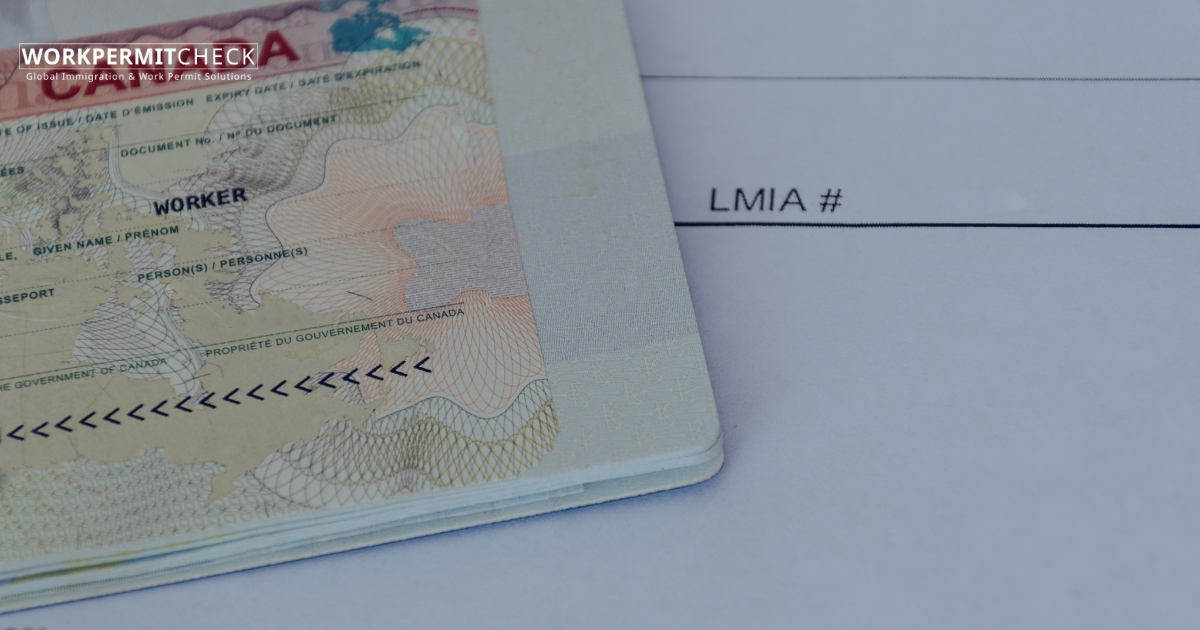
After LMIA approval, the employer receives an LMIA number.
The foreign worker must include this number in the work permit application.
It proves the job is approved by the Canadian government.
LMIA Processing Time
LMIA processing time depends on job type and location.
Average processing time is:
- 2 weeks to 3 months
Some high-demand jobs may be processed faster.
LMIA Fees
Employers must pay the LMIA fee.
The standard fee is:
- CAD $1,000 per worker
Workers do not pay the LMIA fee.
Benefits of LMIA for Foreign Workers
LMIA offers several benefits:
- Allows legal work in Canada
- Helps apply for Canada work permit
- Improves chances of permanent residence
- Provides job security
It is an important step for many foreign workers.
Can LMIA Help in Getting Canada PR?
Yes. A positive LMIA can increase your chances of permanent residence.
It gives extra points in programs like:
- Express Entry
- Provincial Nominee Program
This improves your immigration profile.
Final Thoughts
LMIA is a key requirement for many foreign workers who want to work in Canada. It ensures that Canadian employers hire foreign workers only when no local workers are available.
If your employer receives a positive LMIA, you can apply for a Canada work permit and start working legally. It can also help you build a long-term career and apply for permanent residence in Canada.
Understanding LMIA helps you prepare better and avoid mistakes in your Canada work permit process.
February 20, 2026